 +
+
A creator-rate conversation becomes difficult when a seller arrives with a vague brief and a number taken from a generic calculator. The creator has to guess the workload, the brand has to guess the value, and both sides end up negotiating a price before they agree on the work. A TikTok creator rate negotiation data checklist does not produce one universal rate. It helps a partnership manager bring the information that makes a scoped proposal possible.
Ten-second answer: Prepare the work scope, content purpose, usage questions, timing, public context, and open facts before asking for a proposal. Public metrics can inform preparation, but they cannot set a fair price by themselves.
Follower count, average views, and engagement context can help a partnership manager understand an account. They cannot tell you what a creator should charge for a specific deliverable. The work may include product testing, scripting, filming, revisions, deadlines, usage, exclusivity, or a live appearance. Each changes the conversation.
Start by making the ask concrete. What would the creator make? What would the brand need to approve? Where would the content appear? What happens after it is posted? A clear answer to those questions is more respectful than opening with a budget range and hoping the scope catches up.
Two proposals are not comparable when the brief is still moving. One creator may include one video and organic usage. Another may include editing, extra cutdowns, or a paid-media term. The number is not the only difference; the work itself is different.
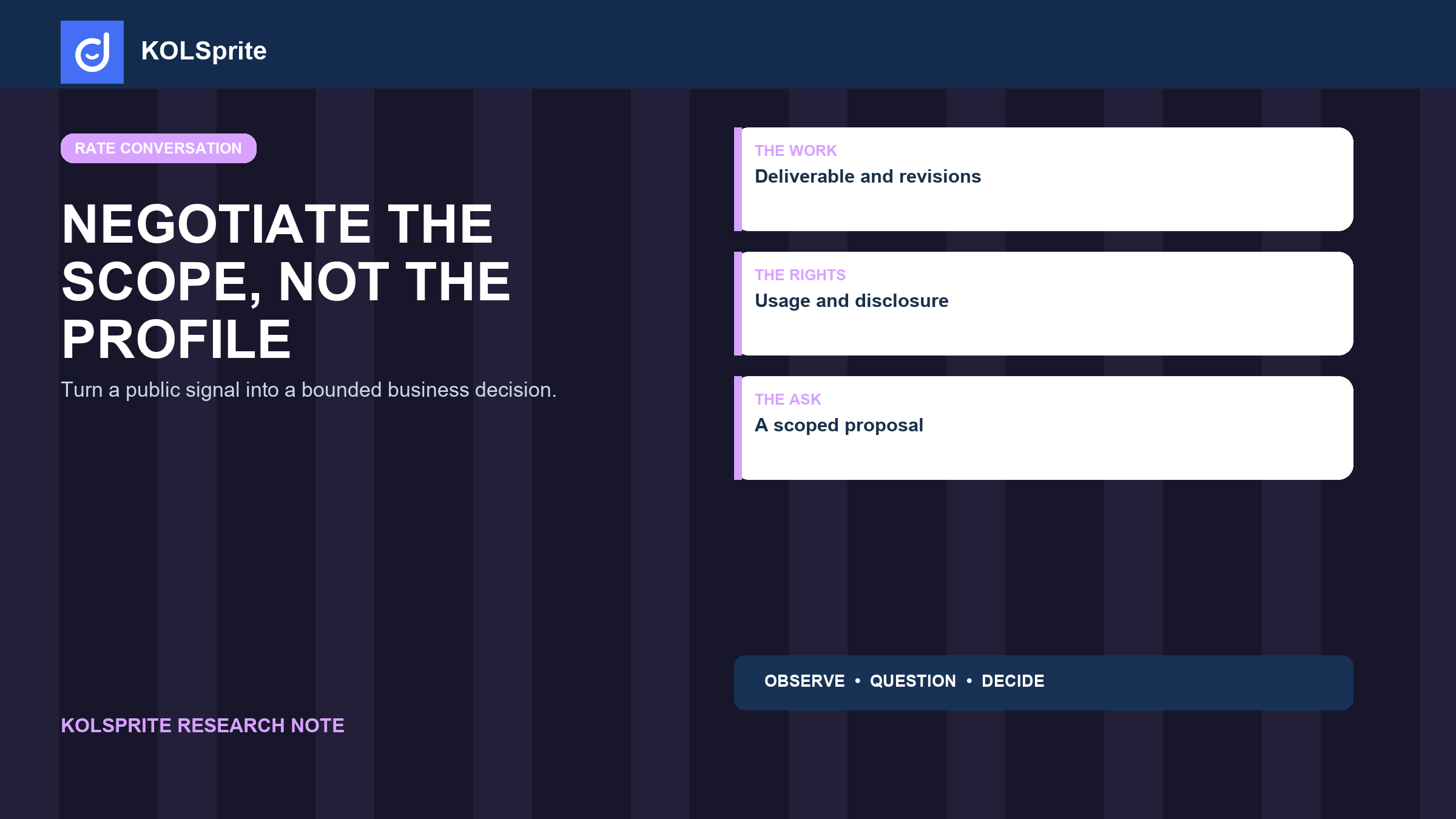
Use a short prep sheet with the deliverable, product, buyer situation, timing, review path, usage questions, and what has not been decided. It does not need to be a contract. It gives both sides a shared starting point before commercial terms are discussed.
Register for KOLSprite and claim a three-day trial to keep relevant public creator context beside the brief your team will actually send.
Register and claim a three-day trial
Public creator context is useful when it helps a brand avoid an obviously mismatched request. A creator’s recurring settings, explanations, and visible audience conversations can inform how a product might be introduced. This is preparation, not a price formula.
KOLSprite can help organize supported public creator and content context beside the shortlist and brief. A partnership manager can reopen the clips that made the creator relevant before sending the request. The creator still controls their availability, rates, and terms.
Usage can change the meaning of a rate conversation. Is the content for the creator’s channel only? Will the brand repost it? Is paid amplification being considered? Is exclusivity important? A clear question now prevents an awkward surprise after a creator has already described a price.
Do not assume that a standard arrangement applies. Write the questions as open items and let the right people answer them. Commercial and legal review may need to happen before a brand can accept a proposal.
| Bring to the conversation | Why it changes the scope | Do not infer it from public data |
|---|---|---|
| Deliverable and revision needs | Defines the work being requested | How quickly the creator can produce it |
| Usage and paid-media questions | May change rights and value | Whether rights are automatically included |
| Launch timing and product availability | Sets practical constraints | Whether the creator can meet the deadline |
Source scope: public profile and content context can prepare a relevant conversation, not establish a creator's rate. Review the FTC disclosure guidance when a paid relationship will be disclosed, and confirm agreement terms directly.
A seller may have a fixed test budget. That is a business constraint, not a statement about a creator’s worth. Say what the test can support and ask whether there is a smaller, clearly scoped way to work together. The answer may be no, and that can still be a productive conversation.
A good TikTok creator rate negotiation data checklist makes that boundary visible. It keeps the team from leaning on public metrics to justify a number that really comes from an internal budget decision.
After the conversation, save what was actually agreed: the scope, timing, usage, disclosures, and next owner. Do not turn one agreement into a universal benchmark. The useful learning is which scope questions changed the proposal and which brief details helped both sides understand the work.
KOLSprite can support the organizational part of the workflow by keeping creator research and collaboration context in a reviewable place. It does not negotiate, guarantee replies, or determine fair compensation. Those remain human decisions.
Join the KOLSprite Discord to discuss creator brief scope, public research limits, and respectful ways to prepare a rate conversation.
 +
+
Join the KOLSprite Discord community
Before you ask about a rate, make it easy for the creator to understand the opportunity. Name the product, the buyer situation, the proposed format, the timeline, and the open usage question. Then invite a scoped proposal. That approach is clearer than asking for a media kit before the brand has explained the work.
If the team cannot describe the scope in a few plain sentences, it is not ready to negotiate. Return to the brief. A better question now is cheaper than a misleading agreement later.
Put the facts in one short note before outreach. Name the product. Name the buyer problem. Name the format you hope to explore. Add the due date, review steps, and usage questions. Then mark what is still open. This note gives the creator a real chance to judge the work. It also gives the brand a clear record of what it has and has not decided.
Do not use a public number as a shortcut. A follower count may help a team understand an account. It does not describe the time, care, rights, or risk in a specific project. A creator may have a small audience and a strong fit for a narrow task. Another may have a large audience but no room for the work. The rate conversation starts with scope because scope is what both sides can discuss honestly.
A TikTok creator rate negotiation data checklist is most helpful when it makes room for a no. The seller may not have the budget for the proposed rights. The creator may not want the timeline. The product may need more proof before it can be briefed. A clear no is better than a vague yes that falls apart during review. The checklist does not remove negotiation. It prevents the first message from hiding the hard parts.
Keep a separate line for disclosure and approval needs. A paid relationship can require a clear disclosure. A branded post may need legal or product review. Those questions should not appear after the creator has already done the work. They are part of the scope. The partnership manager can ask for help from the right owner before asking the creator for a final proposal.
After a conversation, save the parts that changed the work. Maybe paid use mattered. Maybe the delivery date mattered. Maybe a simpler format made the project possible. Those details are more useful than a single price in a shared sheet. They show the next manager why two offers were different. They also make future briefs easier to write.
The final message can stay simple. Explain why the creator is relevant. Describe the proposed work. State the open questions. Invite a scoped proposal. KOLSprite can keep the public research context close to that note, but it cannot decide the rate or terms. A respectful ask makes that boundary clear. It shows the creator that the brand has done its preparation without pretending to know the answer in advance.
Before sending the message, have a second person read the brief for plain meaning. Can they tell what the creator would make, when it is needed, what review is involved, and what use is being considered? If not, fix the brief first. A short, clear note makes it easier for a creator to respond with useful information. It also protects the partnership manager from making a promise that the rest of the team has not approved. That is a practical use of preparation, even when no deal follows.
The checklist should be easy to update. A product date can move. A usage plan can change. A new approver may join. Mark the change and send the new version before the next discussion. Small updates are better than leaving each person with a different idea of the job. They make the conversation more direct and reduce the risk of a surprise after a proposal arrives.
That record also helps the next owner pick up the work without guessing what changed or which question still needs an answer.
Continue the research: keep a defensible creator shortlist · contact creators with a clear first message · send a creator brief with proof requirements.
Latest Articles

As an essential, data-driven toolkit for TikTok influencers and marketers, KOLSprite provides powerful features for effortless creator discovery, trending content identification, and actionable real-time insights.
It empowers users to make smarter decisions and significantly boosts their TikTok business.
 Refer & Earn