 +
+
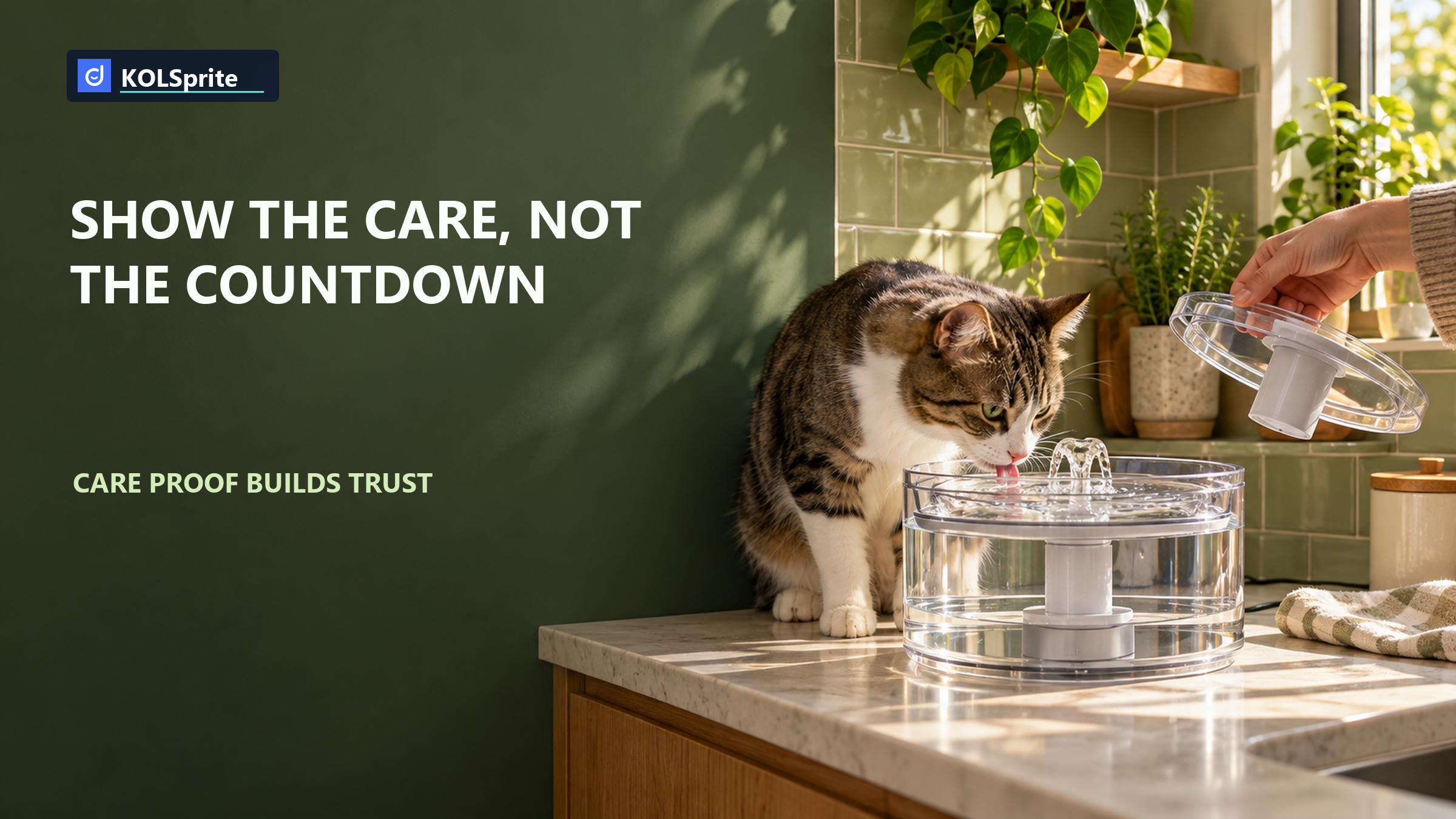
A cat fountain is a repeat-use product. A buyer may like the running water and still wonder what upkeep comes home with it. A cat fountain maintenance video can answer one real care question on the actual unit before another stock-countdown clip. The buyer takes the fountain home, not the countdown clock.
Choose one maintenance question, get the exact manufacturer's instructions, and film only the care action you can verify on the unit you sell. Show what the owner touches, what the manual says to do, and what the finished setup looks like. If you cannot confirm the steps or interval, keep the existing creative and get the documentation first. The result should be a shot list tied to evidence, not a made-up cleaning routine or an implied inventory emergency.
A fountain has two jobs in a product video. It must show why a cat owner might want it, and it must make the care obligation understandable. A short clip can do both, but the second job often gets lost when the script rushes to price or urgency. The owner will need to live with the product after the purchase. They may reasonably ask what comes apart, which parts need attention, and how to know when the unit is ready to use again.
Use the exact model's manual to answer those questions. Designs, parts, and instructions vary. Even a familiar-looking pump or filter can have a product-specific handling rule. Your first production asset is the exact manual, not a shot of someone wiping a bowl. Compare it with the current sellable unit and any included care materials. Resolve any mismatch before filming.
Pick the question that is both important to the buyer and possible to demonstrate clearly. “What does routine cleaning involve?” may be a better first video than a broad “easy to maintain” claim. The former asks for visible steps and can be checked. The latter is subjective and can hide work the owner will actually have to do. If you have documented customer questions, use them to prioritize. If not, treat the question as a hypothesis rather than saying buyers have already asked it.
A short video can teach one care task well. Show the steps that change the meaning of the demonstration, then point to the full instructions for the rest. A buyer can see the commitment without mistaking one clip for the entire care guide.
A US KOLSprite search found an exact BISSELL HydrateWell cat-fountain listing at $40.98 with 22,066 reported units over 30 days. One exact-linked public video title used stock-scarcity language. Those observations show a product context and one messaging choice. They do not establish that stock was truly low, that the video lacked care footage, or that buyers were asking maintenance questions. The returned title is not the entire video.
| Visible public detail | Useful production prompt | What remains unverified |
|---|---|---|
| Exact fountain listing at $40.98 | Identify the product under discussion | Your offer, margin, or care instructions |
| 22,066 reported 30-day units | Note public product activity | Returns, satisfaction, or buyer questions |
| One linked title uses stock-scarcity language | Consider a care-first alternative | Actual stock, full video frames, or persuasion effect |
Source note: KOLSprite's US public search showed the exact fountain and one linked title on October 9, 2026. The title points to a scarcity message, not a verified stock level or a full account of the clip. Product care must be checked against the manufacturer's instructions for the exact unit.
This is enough to pose a useful creative question: would a care demonstration help a shopper understand the product better than another urgency cue? It is not enough to claim that a particular competitor failed to explain care or that this audience is dissatisfied. Keep the question pointed at what your own video can show.
Register for KOLSprite's three-day web trial to inspect the public product and video context. Verify care instructions with the actual product manual.
Register for the three-day trial
Obtain the exact manufacturer's manual or official care instructions for the model and revision you sell. Confirm the model on the unit, package, listing, and document. Read the entire section relevant to the chosen action, including warnings and reassembly notes. If a filter or pump has separate instructions, use the applicable source rather than assuming the main sheet covers it. The production team should mark the specific lines that each shot will demonstrate.
Check claims before filming. A phrase such as “takes one minute,” “dishwasher safe,” or “replace every month” should appear only if the applicable instructions and your own footage support it. Do not turn a recommended care interval into a universal guarantee. If the manual gives conditional guidance, keep the condition in the script. If it gives no interval, do not invent one to make the video feel complete.
Use a real unit in a condition that makes the action visible but does not imply a false before-and-after. Show each part as it is removed or handled, if the manual calls for that action. Keep the critical instruction on screen long enough to read. A close-up can make a connection point clear; a wide shot can show the full layout so the viewer understands where the part belongs. Choose camera angles for comprehension, not just for a satisfying edit.
Have a person familiar with the product check the rough cut against the manual. A technically correct action can become misleading if the edit removes a warning, reverses the order, or hides a needed rinse or setup step. If the process is too long for one short video, narrow the question and direct viewers to the full care guide. Do not compress the steps until the product appears easier to maintain than the instructions say it is.
Start with the buyer's question in their own words: “What do I need to do to keep this fountain clean?” Then define the exact part of that question the short video will answer. It may be how the owner accesses a component, what the approved cleaning action looks like, or how the unit goes back together. Pick only after checking the manual. The script should name the model and avoid drifting into advice for all cat fountains.
Shot one shows the complete unit and the question on screen. Shot two shows the part or area the manual identifies for that care action. Shot three shows a close, uninterrupted view of the verified action. Shot four shows the reassembled or ready state, with any required check that the instructions specify. If the manual requires more steps than fit, add a clear transition to the full instructions rather than pretending the action ended early.
For each shot, add a source column in the production brief. Record the exact manual section or official product instruction used, the claim the viewer hears, and what the frame must visibly prove. Add a “do not imply” column for claims such as a cleaning frequency, product lifespan, health benefit, or ease-of-use promise that the shot cannot support. This is not paperwork for its own sake. It keeps an attractive close-up from becoming a broader statement than the product evidence allows.
Let the care action carry the video. The voiceover can say why the step matters to ownership, but it should not describe a benefit the manual or demonstration cannot establish. If the product has an official term for a part, use that term in captions. If a step is awkward on camera, show it plainly. The buyer benefits more from seeing the real effort than from a seamless edit that hides it.
Bring one pet-product care question to the KOLSprite seller community.
 +
+
Review the product listing alongside the video. If the clip shows a component, check whether it is included with the sellable unit or is an optional extra. If it shows a replacement part, make its status clear. If the listing makes a care claim, check that the video and official instructions agree. TikTok Seller Center's US Product Listing Policy requires accurate product details and representations; the manufacturer's exact instructions remain the source for maintenance steps.
Think about the viewer who watches without sound. They should still know what part is being handled and which step is shown. Captions should be legible and should not cover the crucial movement. A fast cut can make a messy step disappear; that may raise more doubt when the customer opens the product. Keep the action visible long enough to make an informed choice.
Replace the urgency cue with the care demonstration. If you mention stock, use a current inventory fact you can verify and keep it separate from the lesson. Otherwise, leave scarcity out. The video should help a buyer understand ownership rather than hurry them toward a timer.
After publication, watch for questions about the same care action. Those questions can show where the edit, caption, or listing still needs clarity. They do not by themselves prove that the video changed sales or returns. Use the feedback to improve the next explanation, and use your own commerce data if you later want to assess a business outcome.
Enter exact BISSELL HydrateWell cat-fountain product ID 1732549643693888361 in KOLSprite and inspect the public product and its linked-video record. Note that the visible title leans on scarcity, then ask which care question your owned video could answer more directly. The output is one narrow public messaging observation, not a complete audit of that clip.
The public record does not reveal full video frames, a filter replacement interval, returns, inventory truth, or buyer objections. KOLSprite cannot verify the maintenance action on the unit you sell. Use the exact manufacturer's instructions and your own filmed demonstration for that proof. If either is missing, wait before making a care claim.
For a broader check of pet-product claims, see the pet claim review guide. The product video use-case guide can help choose the right demonstration before choosing a format. Once the care video is live, the comment-to-next-video guide can help sort follow-up questions without treating every comment as a measured buyer trend.
Publish when the model matches the instructions, the filmed action follows those instructions, the listing agrees with what appears on screen, and the cut does not hide a necessary step. Keep the claim narrow enough that a viewer can verify it from the demonstration. If the manual is missing or the unit differs from it, pause the brief and obtain the right source. If the care action cannot fit honestly in one clip, split the question or point to the full guide.
That approval rule leaves room for real effort. A cat fountain maintenance video should show the responsibility that comes with a repeat-use product. A buyer who understands the care task can decide whether the fountain fits their home. That is a stronger service than another countdown whose urgency the team cannot substantiate.
Latest Articles

As an essential, data-driven toolkit for TikTok influencers and marketers, KOLSprite provides powerful features for effortless creator discovery, trending content identification, and actionable real-time insights.
It empowers users to make smarter decisions and significantly boosts their TikTok business.

 Refer & Earn